We’ve Been Growing Beautiful Lawns in Northeast Ohio since 1977
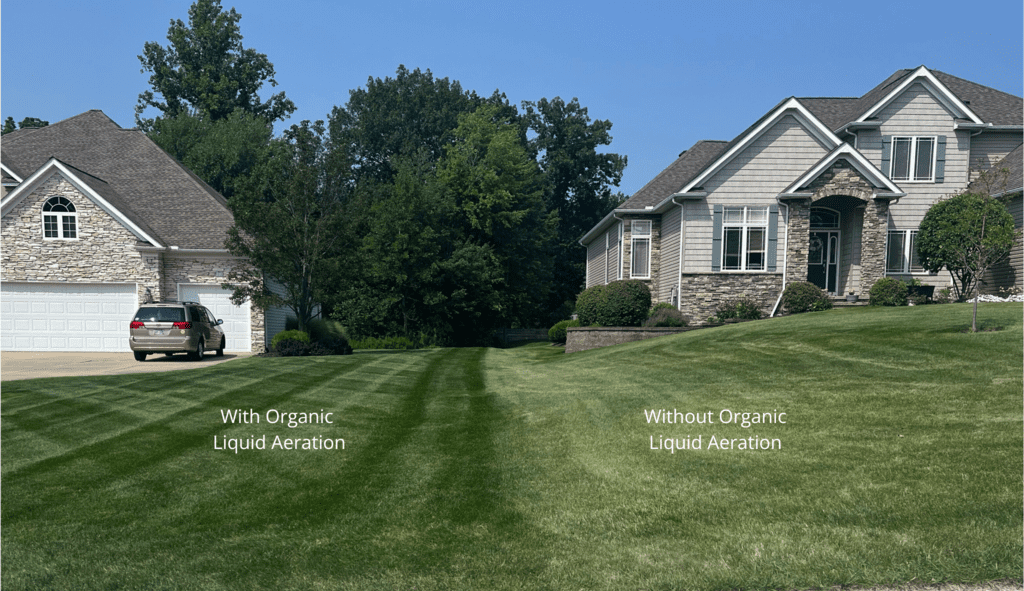
Our experts at Ecolawn love helping homeowners in Painesville, Wickliffe, and Pepper Pike get beautiful results with Organic Liquid Aeration. Because it’s so effective, it’s the only method of aeration we offer.
Liquid aeration lets more oxygen and nutrients penetrate your lawn at deeper levels and can reach the depth of 12 inches. Core aeration only reaches a depth of 3 inches. The added nutrients and air flow lead to a healthier, more resilient, greener lawn. However, the application method and results differ.
Do you want to know if liquid aeration is right for your lawn? Our guide will tell you everything you need to know.
We’ll break down the big questions, such as:
How does Organic Liquid Aeration work?
When is the best time to aerate your lawn in Northeast Ohio?
How do I know if my yard needs liquid aeration?
How does liquid aeration compare to core aeration?
What are the ingredients in liquid aeration?
Is Organic Liquid Aeration safe for children and pets?
How does Ecolawn liquid aeration compare to the other guys?
Is it best to have a professional apply your liquid aeration?
Why is aeration important?
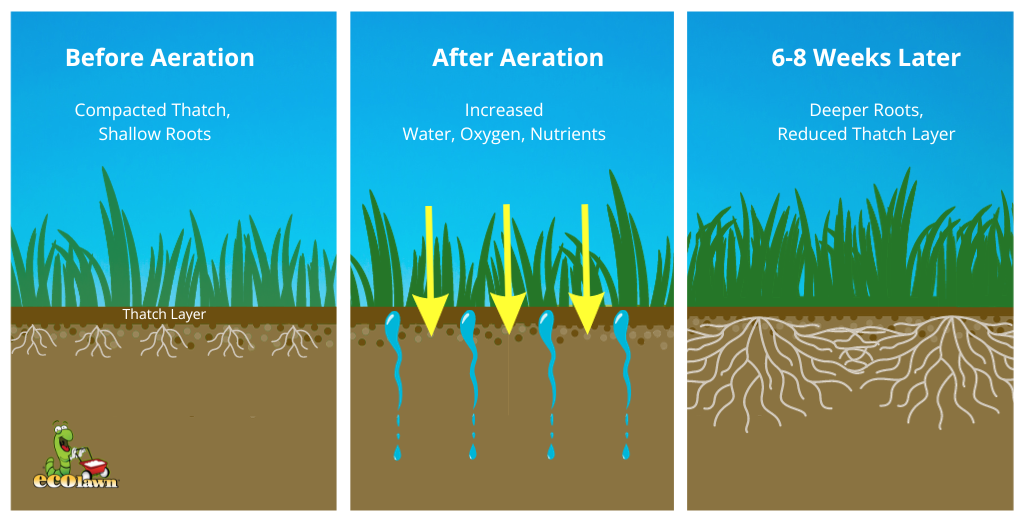
Aeration is important to manage soil compaction that happens with time and simply playing on and using your grass. See, compacted soil limits root growth that’s critical in making roots deep. Aerating adds porosity, or air space, so your lawn can breathe.
We aerate to encourage deep, healthy root growth which is the key to a thick, dense lawn. Liquid aeration penetrates 12” deep throughout your entire lawn.
A deep root system means your lawn has access to more of the nutrients and moisture it receives. And you’ll really see the difference too!
How does Organic Liquid Aeration work?
Core aeration involves taking out small plugs across your lawn. Liquid aeration involves spraying the entire lawn with a liquid mixture of organic ingredients. The compounds attach to soil molecules, forcing compacted soil to separate. This helps your lawn absorb more water and grow deeper roots.
The remaining ingredients provide food for microbes that nourish your lawn. Ok, don’t freak out! We’re talking microscopic, beneficial critters!
The added nutrients create the perfect environment for beneficial microbes and fungi. They break down the thatch layer and soil to let in more oxygen and moisture.
Your lawn uses the extra oxygen and moisture to grow deeper roots. This allows the roots to grow up to 12 inches and access a whole new layer of nutrients they couldn’t reach before! Longer roots allow your turf to bypass competition for nutrients from tree roots, which are usually closer to the surface. The result is a greener, fuller, more drought and disease resistant lawn.
When is the best time to aerate your lawn in Northeast Ohio?
It’s possible to aerate at any time of year. However, our neighbors in Perry and Wickliffe typically schedule aeration services for the fall or the spring. In the fall, your lawn is rooting down, and in the spring, it’s gearing up for new growth. Seasons when your lawn is active offer the most benefit when it comes to aeration.How do I know if my yard needs liquid aeration?
All lawns can benefit from liquid aeration, but if you want to gauge your lawn’s level of need for more air and nutrients, there are a few easy tests you can perform. The screwdriver test is a great place to start. Simply push the end of a screwdriver directly down into the soil. If you encounter a lot of resistance, it means that your soil is compacted and you need to break it down. Another easy test is to inspect your lawn after a good rain. Have puddles formed in some spots? Puddles let you know that the soil can’t absorb the water. Time to aerate! A third sign that aeration is needed is uneven growth. If you have bald patches, thin patches, or a lot of color variation, liquid aeration may be the solution. Sometimes, the thatch layer is readily visible. If you see a mat of dry dead grass and shoots in between the blades, it’s too thick and needs to be broken up with aeration. If you’ve lived in your home for more than a year and you haven’t aerated, it’s a good idea to start thinking about scheduling and application. We recommend applying Organic Liquid Aeration annually.How does liquid aeration compare to core aeration?
Now that you know your yard is in need of aeration, how to know if liquid aeration is the best choice? In our decades of experience treating lawns, we’ve found that Organic Liquid Aeration is the most effective method. Here are some of the benefits:- It’s faster. Core aeration requires heavy equipment and is much more labor intensive compared to liquid aeration. Less labor means lower cost for our customers! We’ll also be in and out before you know it, allowing you to keep your peace and privacy.
- The results last longer. It takes a bit longer to see results. But, your lawn will stay thicker and greener longer than it would with core aeration.
- It treats 100% of the lawn. Core aeration impacts only about 5% of the grass in your yard. Our liquid aeration service treats every inch of your lawn.
- No messy cores. If you’ve ever had core aeration done, you’ve seen the mess created by the cores. They can make your lawn both unsightly and unusable until they’ve had a chance to break down. With liquid aeration, there’s no mess, and you can use your lawn right away.
- It creates drought resistance. Traditional core aeration typically gets you about 2 inches of root growth. Core removal also stresses your turf and can cause it to dry out faster. Liquid aeration allows for up to 12 inches of root growth. That creates much more access to nutrients and moisture beneath the surface. The result will be a healthier, more drought tolerant lawn.
- It helps to resist pests. Removal of cores can also stress your lawn and allow it to dry out faster. These are the conditions that allow pests to take hold. Liquid aeration is more like a spa treatment for your lawn, and over time, the deeper root system will make it less susceptible to pests.
- It boosts resistance to lawn diseases such as Dollar Spot and Red Thread.