
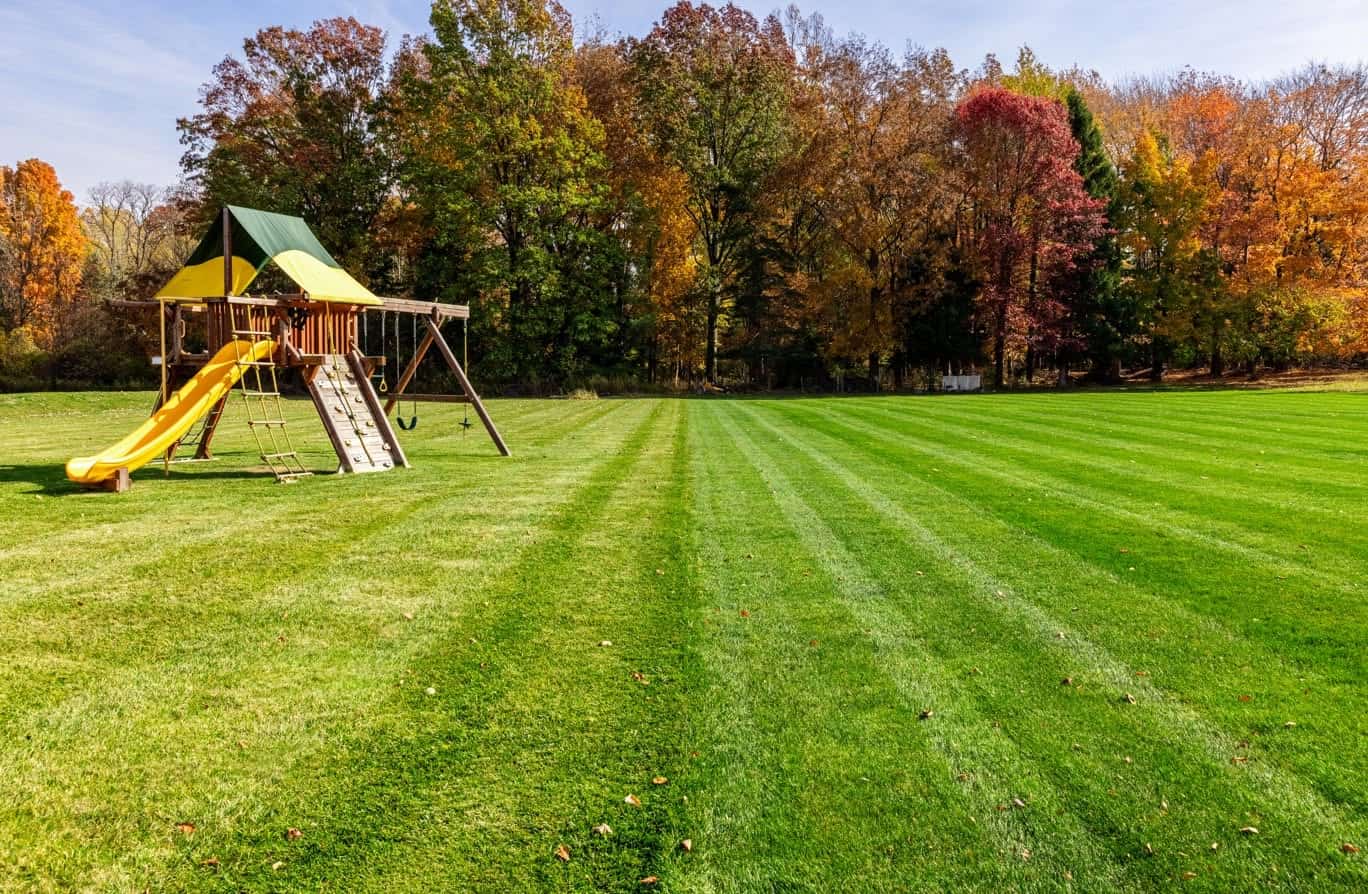
Fall fertilizer and weed control are the secret to a greener spring because they help your lawn recover from summer stress, build stronger roots before winter and control weeds that compete with your grass. For lawns in Northeast Ohio, fall gives you an important opportunity to rebuild instead of waiting until spring to address existing problems.
If summer left your lawn brown, thin, or weedy—fall is the time to address those problems with the right combination of fertilizer, weed control, aeration, or overseeding.
In this article, you’ll learn:
If you were frustrated with your lawn this year, use fall to start rebuilding for a greener spring.
Fall is one of the best times to rebuild your lawn because cooler temperatures and improved growing conditions give grass a better environment for recovery and establishment.
Think of fall as a second spring for your lawn. After summer heat cools off, grass enters another productive growing period with an important advantage: winter comes next, rather than another stretch of hot, stressful weather.
Several conditions make fall lawn care especially valuable:
Spring seeding puts young grass much closer to hot summer conditions. Fall gives you a longer, more favorable window to rebuild areas that struggled during the year.
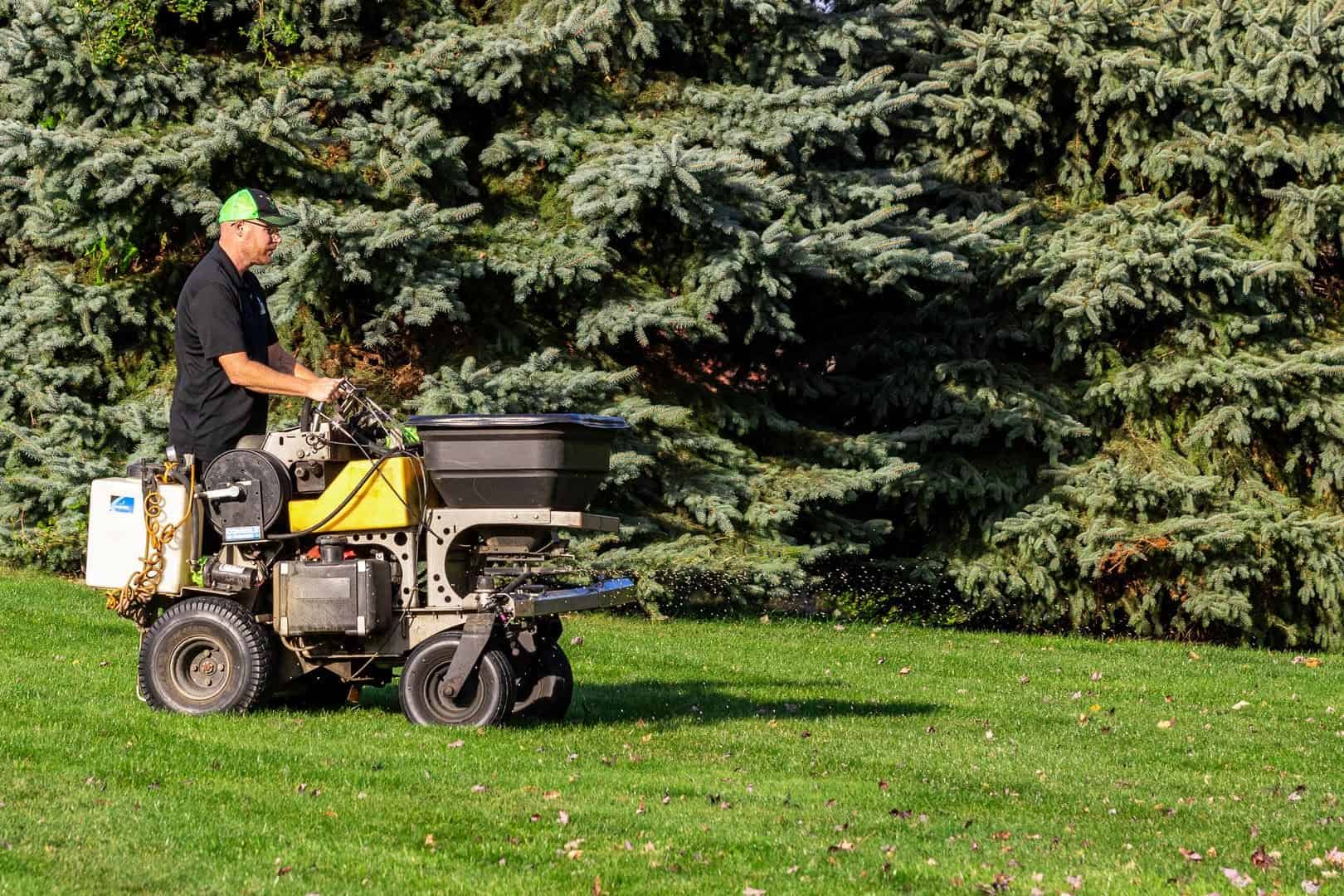
Fall fertilizer and weed control are important because they strengthen your lawn’s root system and address weeds that continue growing into fall.
Grass roots continue growing until the ground freezes, even as growth above ground slows. That makes fall an important time to give your lawn nutrients and address weed pressure before winter.
Fall fertilizer and weed control support your lawn in different ways:
Together, these treatments rebuild your lawn in the fall instead of leaving existing problems until spring.
Aeration and overseeding should be part of your fall lawn care when your lawn has thin, bare, or damaged areas that need new grass to fill back in.
Aeration pulls cores from the soil so new seed reaches the ground instead of resting on top of it. Ecolawn’s fall window runs through roughly Oct. 10 — scheduling early leaves time for an estimate and utility marking.
Overseeding adds grass seed to areas where your existing turf needs help, while aeration creates openings that improve seed-to-soil contact.
Here are signs your lawn needs aeration and overseeding:
| What you’re seeing in your lawn | Why aeration and overseeding help |
|---|---|
| Thin areas | New grass seed increases turf density where existing grass has struggled. |
| Bare spots that aren’t recovering | Overseeding fills areas that otherwise remain exposed going into next year. |
| Damage from summer stress | New seed helps rebuild areas damaged by heat, dry conditions or insect activity. |
| Areas where weeds keep appearing | Establishing thicker turf reduces the open space available for crabgrass and other weeds. |
If you still see these problems at the end of summer, use aeration and overseeding to rebuild those areas before the next growing season.
A fall lawn fertilizer schedule coordinates fertilization and other needed lawn care throughout the fall growing season so you address the right needs at the right time.
Here’s what a recommended fall lawn care schedule looks like:
| Timing | What to focus on | Why it matters |
|---|---|---|
| Late summer | Fertilization and evaluating summer damage | Feeding supports your lawn as it comes out of summer stress, while an evaluation can identify thin or bare areas that need additional help. |
| Early fall | Fall fertilizer, weed control and aeration/overseeding when needed | Roots are actively growing, weeds may still be present, and cooler conditions create an important opportunity to rebuild thin turf. |
| By early October | Complete needed aeration and overseeding | Ecolawn’s fall aeration and overseeding window closes around Oct. 10, so homeowners need to allow time for an estimate, utility marking and scheduling. |
| Later fall | Continue appropriate fall feeding as recommended | Grass roots can remain active until the ground freezes, allowing fall nutrients to continue supporting root development. |
Your lawn’s condition determines the exact treatments it needs throughout this schedule. A healthy lawn requires a different approach than one with bare areas, thinning turf or significant weed pressure.
Following a fall lawn fertilizer schedule helps you address those needs at the appropriate point in the season instead of waiting until spring to deal with them.
After aeration and overseeding, keep newly seeded areas consistently moist to help the grass seed germinate and establish. Proper watering is especially important during the first stages of growth.
Follow these guidelines:
Your work after aeration and overseeding plays an important role in the results. Consistent watering gives new grass the moisture it needs to establish successfully.

Skipping fall fertilizer and weed control means your lawn misses treatments designed to address ongoing nutrient needs and weed pressure before winter. If your lawn struggled during summer, ending treatments early leaves those existing issues unaddressed.
Depending on your lawn’s condition, that can lead to:
If you’re unhappy with your lawn at the end of summer, stopping the care it needs won’t solve the problem. Continuing the appropriate fall treatments gives you a chance to address those issues now instead of putting them off until next year.
Apply fall fertilizer while your lawn’s roots are still actively growing before the ground freezes. The exact timing depends on your lawn’s condition and treatment plan, so following a fall lawn fertilizer schedule helps provide nutrients when your lawn needs them.
Yes. Fall fertilizer feeds actively growing roots before winter, helping your lawn develop a stronger root system that supports healthy growth when spring arrives.
The best fall fertilizer depends on your lawn’s condition and nutrient needs. Rather than choosing a fall yard fertilizer based on the season alone, use a treatment plan that addresses what your lawn needs heading into winter.
Don’t assume a brown lawn doesn’t need fall fertilizer. Some grass varieties go dormant and turn brown during hot, dry conditions without dying, so evaluate the condition of the lawn before deciding what fall treatments it needs.
You can still see weeds after a lawn treatment because weather, moisture, grass variety and growing conditions influence weed activity and treatment results. Persistent weeds don’t automatically mean your lawn treatment wasn’t applied or didn’t work.
Yes, weed control can be part of caring for an overseeded lawn, but timing matters. New grass needs time to establish, and the appropriate timing for weed control depends on the product and maturity of the grass. You should also expect some weeds while new grass establishes because favorable fall growing conditions support both grass and weed growth.
No. September is within Ecolawn’s fall aeration and overseeding window. Ecolawn typically completes these services through about Oct. 10, so schedule early enough to allow time for an estimate, utility marking, and service.