
If you have noticed a new, oddly colorful insect showing up on trees, patios, or grapevines, you are not alone.
Spotted lanternflies are becoming more common across Ohio, and many homeowners are understandably asking the same questions: What is this thing? Is it dangerous? And do I need to do something about it?
As a local lawn and plant health care provider, our role is not to alarm you. It is to help you understand what is happening, why it matters, and when action makes sense. The good news is that spotted lanternflies are more of a nuisance pest than a landscape killer. The challenge is that their populations can explode quickly, creating stress for plants and frustration for homeowners if they are ignored.
What Is the Spotted Lanternfly?
The spotted lanternfly is an invasive insect that was first detected in the United States in Pennsylvania and has steadily spread into surrounding states, including Ohio. While it is visually striking, with gray wings and flashes of red, it is not native to our ecosystem and has very few natural predators here.
Spotted lanternflies feed by tapping into a plant’s vascular system and extracting sap. This feeding does not usually kill healthy trees or shrubs outright, but it can weaken plants, especially when populations are high.
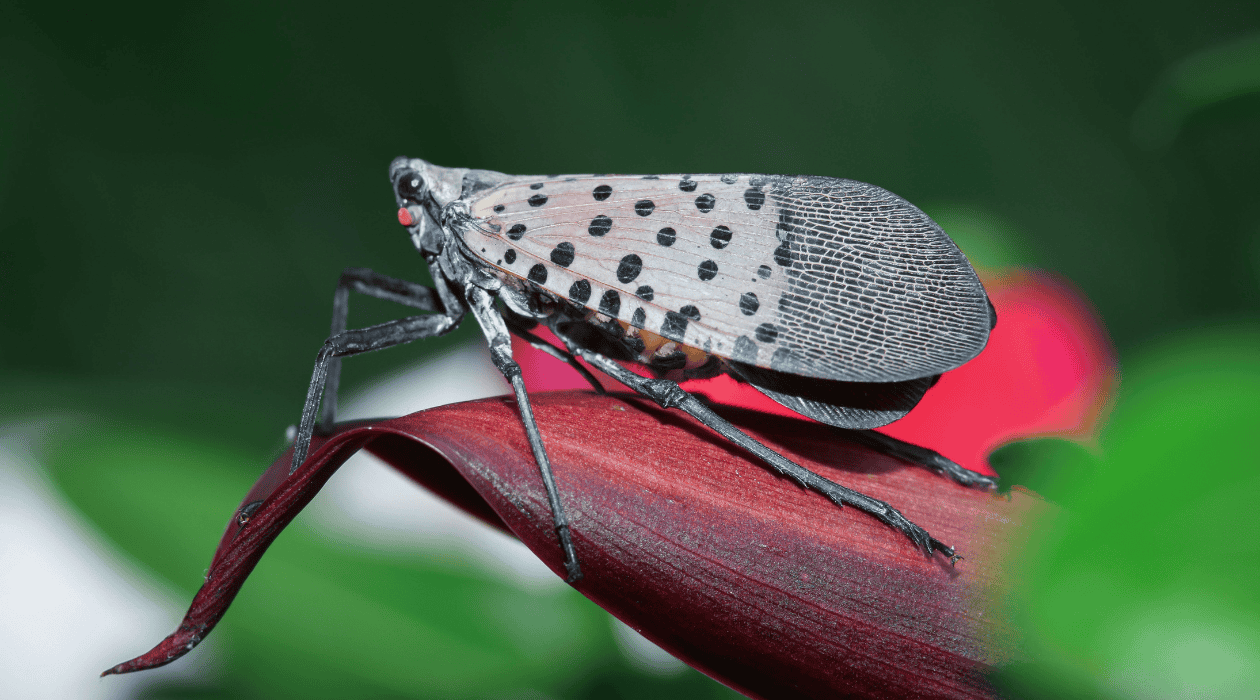
How to Identify Spotted Lanternflies
Spotted lanternflies go through several life stages, which can make identification confusing.
- Nymphs (spring to early summer): Small, black insects with white spots, later turning red and black as they mature.
- Adults (late summer to fall): About one inch long, gray with black spots, and bright red underwings when they move or fly.
- Egg masses (fall through winter): Gray, mud-like smears on tree bark, firewood, fences, outdoor furniture, stone, and other hard surfaces.
Many homeowners first notice the adults when large numbers begin gathering on trees, decks, or siding.
Are Spotted Lanternflies a Threat to My Landscape?
This is the most important question, and the answer requires some nuance.
Spotted lanternflies are considered a nuisance pest. They are unlikely to kill established trees or shrubs on their own. However, they can still cause problems, especially when populations grow rapidly.
Here is why they matter:
- They stress plants by feeding on sap, which can reduce vigor over time
- Heavy feeding can make plants more vulnerable to drought, disease, or other pests
- They excrete a sticky substance called honeydew, which coats leaves, patios, and vehicles
- Honeydew attracts ants, wasps, and flies and often leads to black sooty mold growth
In short, the issue is not one or two lanternflies. The issue is what happens when hundreds or thousands appear seemingly overnight.
Plants Spotted Lanternflies Prefer
Although spotted lanternflies are considered generalist feeders, meaning they feed on many plant types, they do have clear preferences. Properties with these plants tend to see heavier activity:
- Red maple
- Tree-of-heaven (their primary host)
- Grapevines
This is especially relevant for Ohio homeowners with backyard grapevines, decorative arbors, or vineyards. Grape vines are a favored nesting and feeding site and can attract repeat infestations if not monitored.
Why Spotted Lanternfly Populations Feel Unpredictable
One of the reasons homeowners feel caught off guard is how quickly populations can build.
Spotted lanternflies reproduce efficiently, and their egg masses are easily transported on outdoor items. One season may bring minimal activity, followed by a sudden surge the next. While research suggests they may be more of a short-lived nuisance than a permanent, devastating pest, the years when populations peak can be extremely frustrating.
This unpredictability is why early awareness and proactive management matter.
What Ohio Homeowners Should Do If They See Spotted Lanternflies
Stay Calm and Observe
Seeing a few spotted lanternflies does not automatically mean your landscape is in danger. Take note of where you are seeing them and whether numbers appear to be increasing.
Avoid Random DIY Spraying
Over-the-counter products are often applied too late, too early, or too frequently. Misapplied treatments can stress plants further and may not significantly reduce lanternfly populations.
Reduce Favorable Conditions
- Remove clutter near trees and structures where egg masses can hide
- Monitor grapevines and stressed trees more closely
- Clean honeydew residue from surfaces to discourage secondary pests
Know When to Call a Professional
If lanternflies are appearing in large numbers, returning year after year, or creating visible plant stress or mess around your home, professional evaluation is appropriate.
How Spotted Lanternflies Are Managed Professionally
From a plant health care perspective, spotted lanternflies are relatively easy to manage when treatments are timed correctly.
Professional management focuses on:
- Preventative applications rather than reactionary spraying
- Targeting feeding behavior to reduce plant stress
- Limiting population growth before it reaches nuisance levels
In many cases, treatments may be recommended once or twice per year, depending on pressure and plant types on the property.
How Ecolawn Can Help
Spotted lanternflies can be addressed using the same professional pesticide formulation we use in our perimeter pest control program. This allows us to manage lanternflies efficiently while staying consistent with a broader plant and property protection strategy.
Our approach is not about over-treating. It is about reducing stress on your landscape, limiting honeydew buildup, and preventing the kind of population explosions that lead to frustration and complaints.
If treatment is warranted, we will explain why, when, and what results you can reasonably expect.
Final Thoughts for Ohio Homeowners
Spotted lanternflies are not something to ignore, but they are also not something to panic about. With the right information and a measured response, most homeowners can avoid serious issues.
As your lawn and plant health care provider, we believe in bringing these topics to your attention early, before small problems turn into big ones. Awareness, monitoring, and timely action make all the difference.
Your Next Steps
If you are seeing spotted lanternflies on your property or are concerned about grapevines, red maples, or stressed trees, our team can help. We can evaluate your landscape and, if appropriate, treat spotted lanternflies using our professional perimeter pest program formulation. Contact us to schedule a consultation and get ahead of the problem.
Frequently Asked Questions (FAQ)
- Will spotted lanternflies kill my trees?
In most cases, no. They rarely kill healthy trees but can cause stress, especially when populations are high. - Are spotted lanternflies dangerous to people or pets?
No. They do not bite, sting, or pose a health risk to people or pets. - Why are there suddenly so many spotted lanternflies?
They reproduce quickly and have few natural predators, which allows populations to spike rapidly. - What is the sticky residue they leave behind?
It is called honeydew, a sugary waste product that attracts other insects and causes sooty mold. - Do spotted lanternflies prefer certain plants?
Yes. They commonly target red maples, tree-of-heaven, and grapevines. - Should I scrape off egg masses myself?
Egg masses can be removed, but many are hidden or missed. Scraping alone rarely solves the problem. - When is the best time to treat spotted lanternflies?
Treatment timing depends on life stage and population pressure. Preventative timing is most effective. - Are store-bought sprays effective?
They may kill individual insects but often fail to control larger populations or prevent reinfestation. - How long will spotted lanternflies be a problem in Ohio?
Current research suggests they may be a short-term nuisance, but peak years can still be disruptive. - 10. When should I call a professional?
If lanternflies are appearing in large numbers, returning yearly, or stressing plants, professional help is recommended.